what must be done to stop ddos attacks
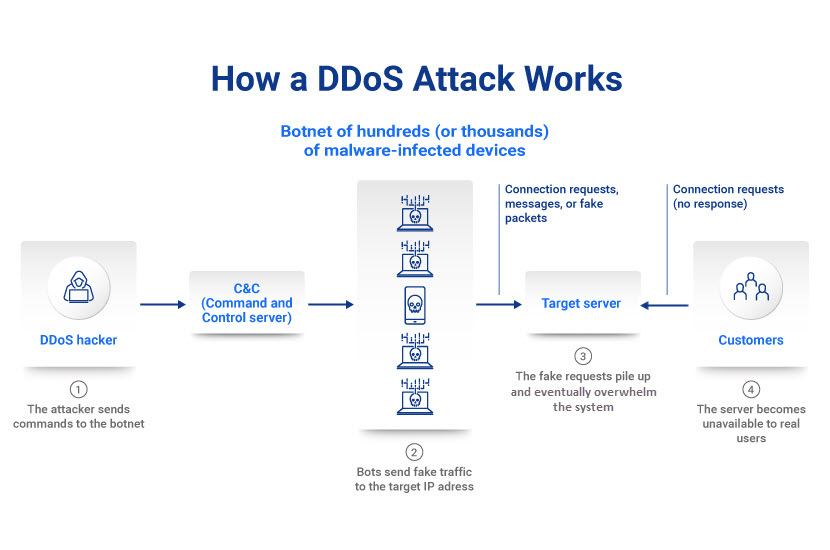
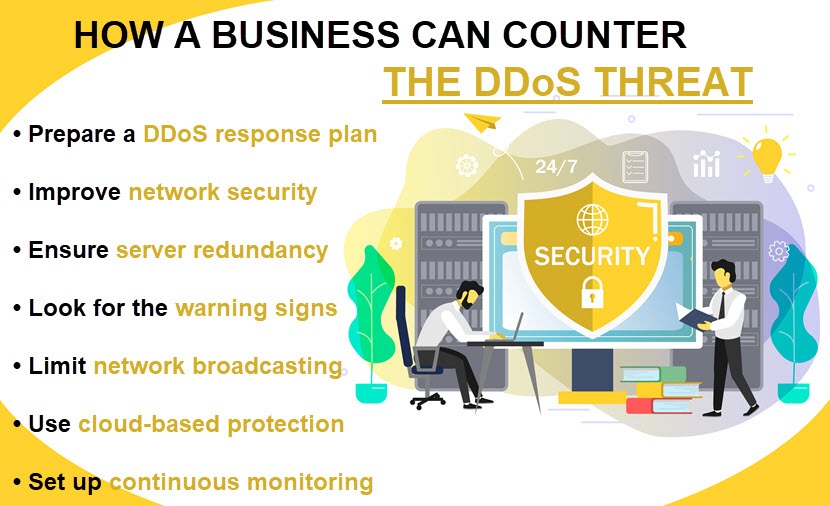
A DDoS attack enables a hacker to flood a network or server with bogus traffic. As well much traffic overloads resource and disrupts connectivity, stopping the system from processing genuine user requests. Services become unavailable, and the target company suffers prolonged downtime, lost revenue, and dissatisfied customers. This article explains how a business can forbid DDoS attacks and stay a pace alee of would-exist hackers. The practices we show below assistance minimize the impact of a DDoS and ensure a quick recovery from an set on endeavour. A DDoS (Distributed Denial of Service) is a cyberattack that aims to crash a network, service, or server by flooding the system with false traffic. The sudden fasten in messages, connection requests, or packets overwhelms the target'south infrastructure and causes the system to slow down or crash. While some hackers use DDoS attacks to blackmail a concern into paying a ransom (like to ransomware), more common motives behind a DDoS are to: DDoS attacks are a danger to businesses of all sizes, from Fortune 500 companies to small e-retailers. Statistically, DDoS hackers most oftentimes target: Attackers typically use a botnet to cause a DDoS. A botnet is a linked network of malware-infected computers, mobile devices, and IoT gadgets under the attacker'due south command. Hackers apply these "zombie" devices to send excessive numbers of requests to a target website or server'south IP accost. Once the botnet sends enough requests, online services (emails, websites, web apps, etc.) ho-hum down or fail. Co-ordinate to a Radware written report, these are the average lengths of a DDoS attack: While a DDoS typically does non directly atomic number 82 to a data alienation or leakage, the victim spends time and money getting services dorsum online. Loss of business, abandoned shopping carts, frustrated users, and reputational harm are usual consequences of failing to prevent DDoS attacks. A DDoS is often a distraction for other, more than disastrous threats. Read about the nigh dangerous cyber security attack types and learn how to protect your business. While all DDoS attacks aim to overwhelm a organisation with too much action, hackers take unlike strategies they rely on to crusade a distributed deprival of service. The iii main types of attack are: The three approaches rely on different techniques, just a skilled hacker can apply all 3 strategies to overwhelm a single target. All pNAP servers come up with DDoS protection at no additional cost. Stay online 24/7 with our automated traffic filtering and lightning-fast DDoS mitigation infrastructure. An awarding-layer attack targets and disrupts a specific app, non an unabridged network. A hacker generates a loftier number of HTTP requests that exhaust the target server's ability to respond. Cybersecurity specialists measure app-layer attacks in requests per second (RPS). Common targets of these attacks include: Trying to prevent DDoS attacks of this blazon is challenging equally security teams often struggle to distinguish betwixt legitimate and malicious HTTP requests. These attacks use fewer resources than other DDoS strategies, and some hackers tin even use simply a single device to orchestrate an application-layer attack. Another mutual proper noun for an app-level DDoS is a layer 7 assault. Protocol DDoS attacks (or network-layer attacks) exploit weaknesses in the protocols or procedures that govern internet communications. While an app-level DDoS targets a specific app, the goal of a protocol assault is to slow down the entire network. The two nigh common types of protocol-based DDoS attacks are: Cybersecurity experts measure protocol attacks in packets per 2d (PPS) or bits per 2d (BPS). The primary reason why protocol DDoS is so widespread is that these attacks can easily bypass poorly configured firewalls. A book-based DDoS assail consumes a target's available bandwidth with fake data requests and creates network congestion. The attacker'south traffic blocks legitimate users from accessing services, preventing traffic from flowing in or out. The near common types of volumetric DDoS attack types are: All volumetric attacks rely on botnets. Hackers apply armies of malware-infected devices to cause traffic spikes and use up all available bandwidth. Volumetric attacks are the most common type of DDoS. Bare Metal Cloud, pNAP'southward deject-native dedicated server, offers a robust resistance to DDoS. Each server comes with free twenty Gbps DDoS protection that ensures availability even if you lot face a high-traffic volumetric attack. While in that location is no way to prevent a hacker from attempting to cause a DDoS, proper planning and proactive measures reduce the risk and potential impact of an attack. Your security team should develop an incident response plan that ensures staff members respond promptly and effectively in instance of a DDoS. This plan should comprehend: The ability to react to unexpected events is vital to business continuity. Our article on disaster recovery takes y'all through all you need to know to create an effective DR plan. Network security is essential for stopping whatsoever DDoS set on effort. As an attack only has an impact if a hacker has enough time to pile up requests, the ability to identify a DDoS early on is vital to controlling the blast radius. You lot can rely on the following types of network security to protect your business from DDoS attempts: Protecting from DDoS attacks besides requires high levels of network infrastructure security. Securing networking devices enables you to prepare your hardware (routers, load-balancers, Domain Name Systems (DNS), etc.) for traffic spikes. Relying on multiple distributed servers makes it hard for a hacker to attack all servers at the aforementioned time. If an assaulter launches a successful DDoS on a single hosting device, other servers remain unaffected and take on extra traffic until the targeted organisation is back online. Y'all should host servers at data centers and colocation facilities in dissimilar regions to ensure you do not have any network bottlenecks or unmarried points of failure. You can also utilize a content delivery network (CDN). Since DDoS attacks piece of work by overloading a server, a CDN can share the load equally across several distributed servers. PhoenixNAP'south colocation services enable you lot to set an optimal hosting surroundings while enjoying top levels of security, high redundancy, and a variety of managed services. If your security squad can speedily identify the traits of a DDoS attack, you lot can take timely action and mitigate the damage. Common signs of a DDoS are: Remember that not all DDoS attacks come with loftier traffic. A depression-volume attack with a brusk duration often goes under the radar as a random event. Notwithstanding, these attacks tin can be a test or diversion for a more dangerous breach (such as ransomware). Therefore, detecting a low-volume attack is as vital as identifying a total-blown DDoS. Consider organizing a security awareness training plan that educates the entire staff on the signs of a DDoS attack. That manner, you practise not need to wait for a security team member to pick up on the warning signs. Using continuous monitoring (CM) to analyze traffic in real-fourth dimension is an fantabulous method of detecting traces of DDoS activity. The benefits of CM are: Depending on a setup, the CM tool either contacts admins in case of an upshot or follow response instructions from a pre-defined script. Intrigued by continuous monitoring? Our Nagios tutorial explores this popular CM tool and offers an platonic starting point for newcomers to Nagios. A hacker behind a DDoS attack will likely send requests to every device on your network to amplify the touch on. Your security squad can counter this tactic by limiting network broadcasting between devices. Limiting (or, where possible, turning off) circulate forwarding is an effective way to disrupt a loftier-volume DDoS attempt. Where possible, you lot can besides consider instructing employees to disable repeat and chargen services. While using on-prem hardware and software to counter the DDoS threat is vital, cloud-based mitigation does not have the same capacity limitations. Cloud-based protection can scale and handle fifty-fifty a major volumetric DDoS attack with ease. You have the selection of outsourcing DDoS prevention to a cloud provider. Some of the key benefits of working with a third-political party vendor are: A concern typically has two choices when setting up cloud-based DDoS protection: If your in-house team has the necessary know-how, you may non demand to solely rely on a cloud provider for cloud-based DDoS protection. Yous can set up a hybrid or multi-cloud environs and organize your traffic to become the same furnishings as either on-demand or always-on DDoS protection. DDoS threats are not only becoming more than dangerous, but attacks are also increasing in number. Experts predict the average number of annual DDoS attempts volition ascent to xv.four million by 2023. That number indicates that nearly every business will confront a DDoS at some point, and then preparing for this set on blazon should be at the acme of your security to-exercise listing.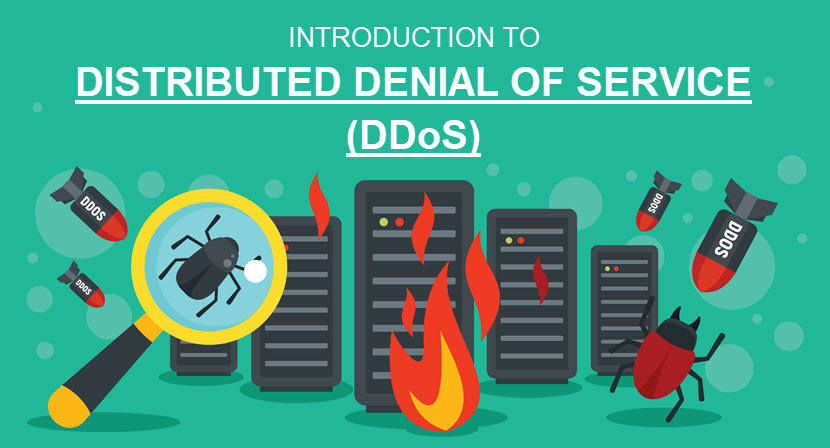
What Is a DDoS Assault?
Types of DDoS Attacks
Application-Layer Attacks
Protocol Attacks
Volumetric Attacks
7 Best Practices to Preclude DDoS Attacks
Create a DDoS Response Program
Ensure High Levels of Network Security
Accept Server Redundancy
Look Out for the Warning Signs

Continuous Monitoring of Network Traffic
Limit Network Broadcasting
Leverage the Deject to Prevent DDoS Attacks
Practise Not Overlook the DDoS Threat
schreiberbropper1975.blogspot.com
Source: https://phoenixnap.com/blog/prevent-ddos-attacks
0 Response to "what must be done to stop ddos attacks"
Post a Comment